Articles
Every articles on Jobstepup.
Six Sigma Certification Guide: What You Need to Know
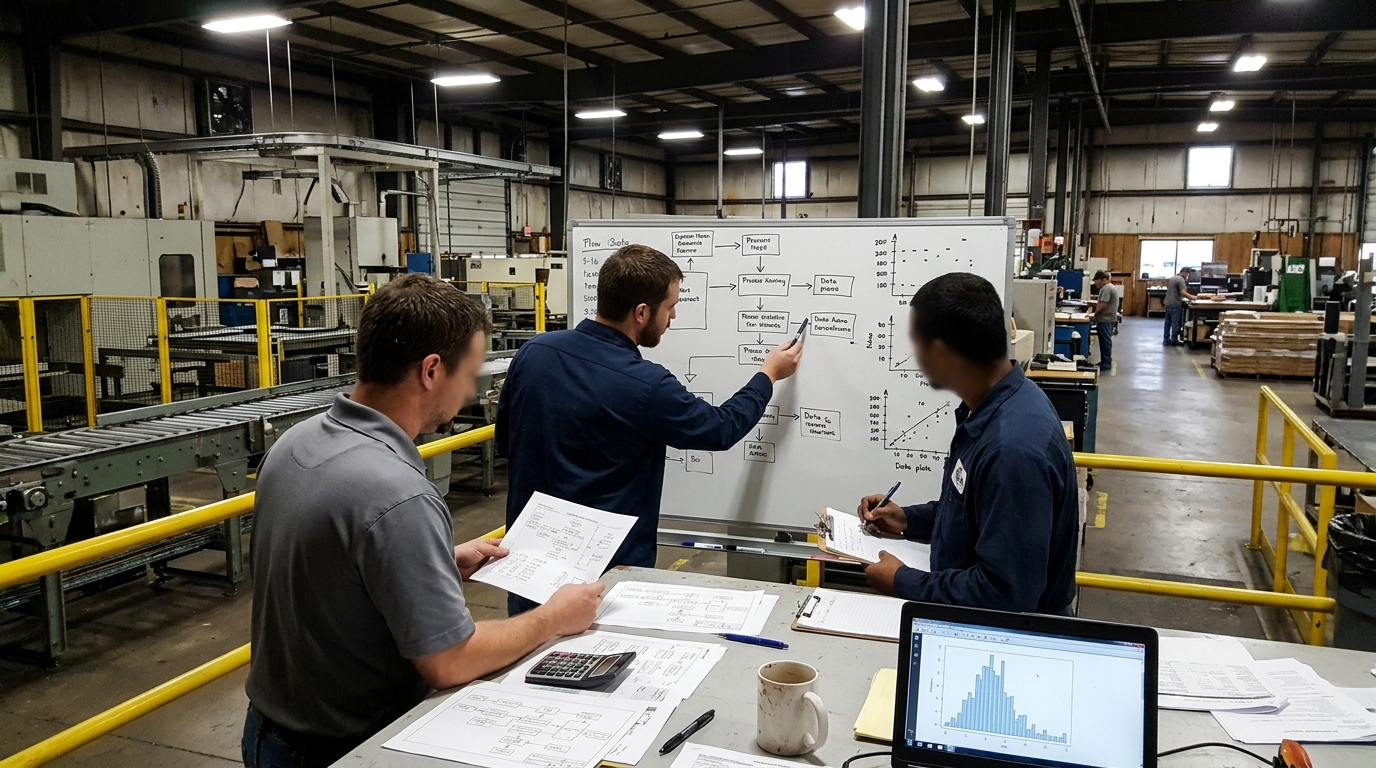
Six Sigma certification is a structured credential in process improvement, built around the DMAIC cycle (define, measure, analyse, improve, control) and awarded in belt levels. The five recognised levels run from White and Yellow through Green and Black to Master Black Belt, with each level taking on a bigger role in leading projects (SixSigma.us). Which body you certify with matters more than most people expect: ASQ, IASSC and the Council for Six Sigma Certification set different rules on experience, project evidence and renewal.

Is a Career in Human Resources Right for You?
Human resources suits you if you can hold confidential information without leaking it, enjoy getting details exactly right in a payroll or benefits system, and can stay calm when someone is angry at you for applying a policy you did not write. The work is part administration, part advising managers, part investigating problems — and the mix shifts depending on whether you join a 40-person company or a 40,000-person one.

How to Negotiate Your Salary as a Registered Nurse
Registered nurse pay is negotiable more often than nurses expect, but what you can move depends on where you work. In a non-union hospital or clinic, base rate, step placement, sign-on money and shift assignment are usually all on the table; under a collective bargaining agreement, the base rate per step is fixed and the negotiation is about which step you land on and what differentials you qualify for.

What Does a Veterinary Technician Do?
A veterinary technician is the nurse, lab tech and radiographer of an animal clinic. Working under a licensed veterinarian, you run the medical tests that help diagnose injuries and illnesses, restrain patients for exams, administer anesthesia and monitor how animals respond, give prescribed medications and vaccines, and record case histories (U.S. Bureau of Labor Statistics, 2025-08).

How to Become a Cybersecurity Analyst After a Military Career
If you held an IT, signals, intelligence or cyber work role in uniform, the move to civilian cybersecurity analyst work is usually a 6-to-18-month project rather than a restart. You already have the habits the job runs on — shift handovers, incident reporting, configuration compliance — and possibly an approved baseline certification. The U.S. Bureau of Labor Statistics (2025) lists a bachelor's degree as the typical entry-level education for information security analysts, with fewer than 5 years of related work experience and no on-the-job training required.

How to Become a Veterinary Technician: A Step-by-Step Guide
Veterinary technicians are the nurses of animal medicine. You draw blood, take x-rays, run lab tests, monitor anesthesia, give medications and record case histories while a veterinarian directs care (U.S. Bureau of Labor Statistics, 2025). Most people get there through an associate degree from a program accredited by the AVMA Committee on Veterinary Technician Education and Activities (CVTEA), then a credentialing exam — the Veterinary Technician National Examination (VTNE).

How to Learn SQL for Your Career
SQL is the language you use to ask a database a question and get an answer back, and it underpins a long list of jobs — database administration, analytics and software development among them (Dice, undated). You can get to a useful working level in a few months of consistent practice: install a free database, learn filtering and joins, build a small project with real data, then validate the skill with a free skills test or a vendor exam.

How to Become a Pharmacy Technician: Step-by-Step Guide
Becoming a pharmacy technician usually means finishing high school, completing training (either through an employer or a formal program), meeting your state board of pharmacy's registration rules, and sitting a certification exam such as the Pharmacy Technician Certification Exam (PTCE) from the Pharmacy Technician Certification Board (PTCB) or the ExCPT from the National Healthcareer Association (NHA). The U.S. Bureau of Labor Statistics (2025) lists a high school diploma or equivalent as the typical entry-level education, with on-the-job training as part of the usual route.

How to Write a Resume for a Remote Job
A resume for a remote job does everything a normal resume does, plus two extra things: it proves you can do the work without someone standing over you, and it names the collaboration tools you will be expected to use on day one. Reviewers typically spend six or seven seconds reading a resume, so remote-specific evidence has to sit near the top, not in a line at the bottom (CareerOneStop).

Paralegal Salary Negotiation Scripts and Tips
Paralegal pay is negotiable more often than most paralegals assume, but the leverage you have depends on when you ask. At a job offer you are bargaining against a budgeted range; at an annual review you are bargaining against a pool that was set months earlier; after a certification or a new responsibility you are bargaining against a job description that has changed.

Paralegal vs Legal Assistant Salary: Which Pays More?
There is no clean national answer, because the U.S. Bureau of Labor Statistics counts paralegals and legal assistants as one occupation (SOC 23-2011) and does not publish separate wage medians for the two titles (lawjobs.com, May 2025). That combined occupation had a median annual wage of $62,890 in May 2025 (U.S. Bureau of Labor Statistics).

How to Switch from Teaching to Instructional Design
Switching from teaching to instructional design means moving from delivering instruction live to designing it for someone else to deliver — or for a learner to complete alone on a screen. The work uses the same core skills you already have (breaking down a standard into objectives, writing assessments, checking whether learning actually happened), applied in authoring tools like Articulate Storyline 360 and learning management systems like Canvas or Cornerstone.

How to Switch to a Career in Nursing From Teaching
Moving from teaching to registered nursing means earning a nursing degree and a state license, not transferring your teaching credential. If you already hold a bachelor's degree in any field, the usual route is an accelerated BSN, which runs 12 to 19 months and sometimes up to two years (Nurse.org, 2026-01-19), after prerequisite science courses and before the NCLEX-RN licensing exam.

How to Write a Resume for a Warehouse Worker
A warehouse resume works when it shows how much you moved, how accurately you moved it, and what equipment you are cleared to use. Hiring managers for picking, loading and receiving roles want to see units per shift, order accuracy, lift capacity and any powered industrial truck training on the page, not a paragraph about your work ethic.

How to Become a Veterinary Technician
Becoming a veterinary technician in the US usually means finishing a veterinary technology program accredited by the AVMA Committee on Veterinary Technician Education and Activities (CVTEA), passing the Veterinary Technician National Examination (VTNE), and then applying to your state board for the credential it issues — LVT, CVT or RVT, depending on the state. The associate degree route takes about two years of full-time study; a bachelor's in veterinary technology takes about four.

How to Learn Public Speaking for Your Career
Public speaking is learned by repetition in front of real audiences, not by reading about it. A practical path runs about six months: start with short, low-stakes talks, join a club or course that gives you a speaking slot and feedback every few weeks, then move up to meeting presentations, conference panels and training sessions you can point to on a resume.
HVAC Technician Salary: What to Expect
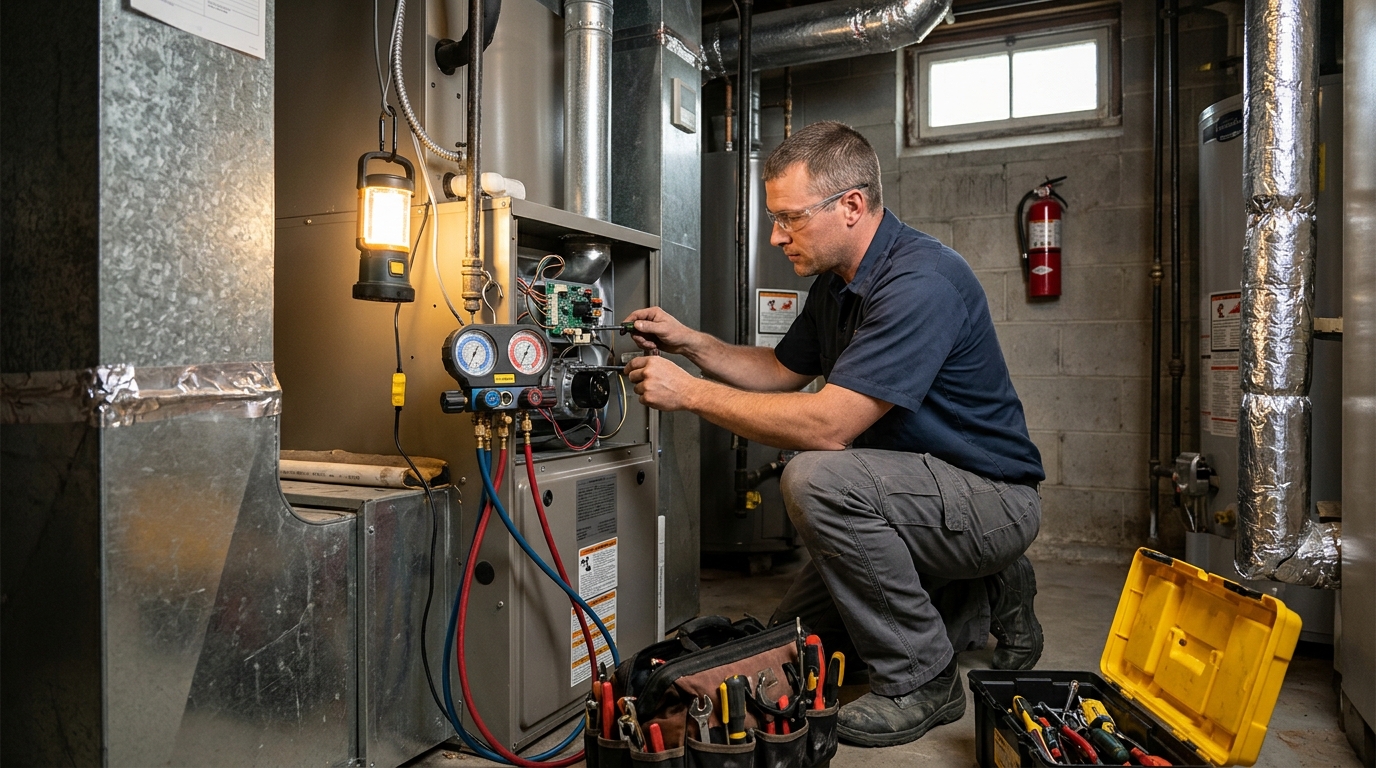
Heating, air conditioning and refrigeration mechanics and installers earned a median annual wage of $57,300, according to U.S. Bureau of Labor Statistics OEWS data for May 2023. The middle half of the trade earned between $46,550 and $71,120, while the lowest 10 percent earned under $37,270 and the highest 10 percent earned more than $84,250.

Life as a Bank Teller: What to Expect
A bank teller handles the face-to-face money movement inside a branch: deposits, withdrawals, check cashing, loan payments and cash orders, all logged against a drawer that must balance at the end of every shift. Most of the day is spent standing at a window or drive-through station, following fixed procedures for identity verification, cash handling and transaction limits.

How to Become a Solar Panel Installer Without a Degree
Solar photovoltaic installation is one of the few construction trades where a high school diploma or GED, an OSHA 10-Hour Construction card and a clean driving record are enough to be considered for a ground-crew or installer-helper job. Employers substitute documented safety training, verifiable hands-on hours and entry credentials such as the NABCEP PV Associate for formal education, and they train the rest on site.

Call Center Cover Letter: Examples and Template
A call center cover letter has one job: prove in under a page that you can take calls from upset or confused people, find answers in a computer system while they wait, and log what happened afterwards. Hiring managers for these roles read quickly and in volume, so the letter that works is short, names the software in the posting, and attaches a number to every claim.

Paralegal Pay Guide: Salary Ranges and Factors
Paralegal pay is published in detail by the U.S. Bureau of Labor Statistics, which reports a median annual wage for paralegals and legal assistants along with 10th, 25th, 75th and 90th percentile figures (U.S. Bureau of Labor Statistics, 2025-05). That spread matters more than any single number: the bottom 10 percent and top 10 percent of the occupation sit far apart, and where you land depends on your employer type, your state and how many years of substantive legal work you have behind you.
Veterinary Technician vs Veterinary Assistant: Comparing Duties and Training
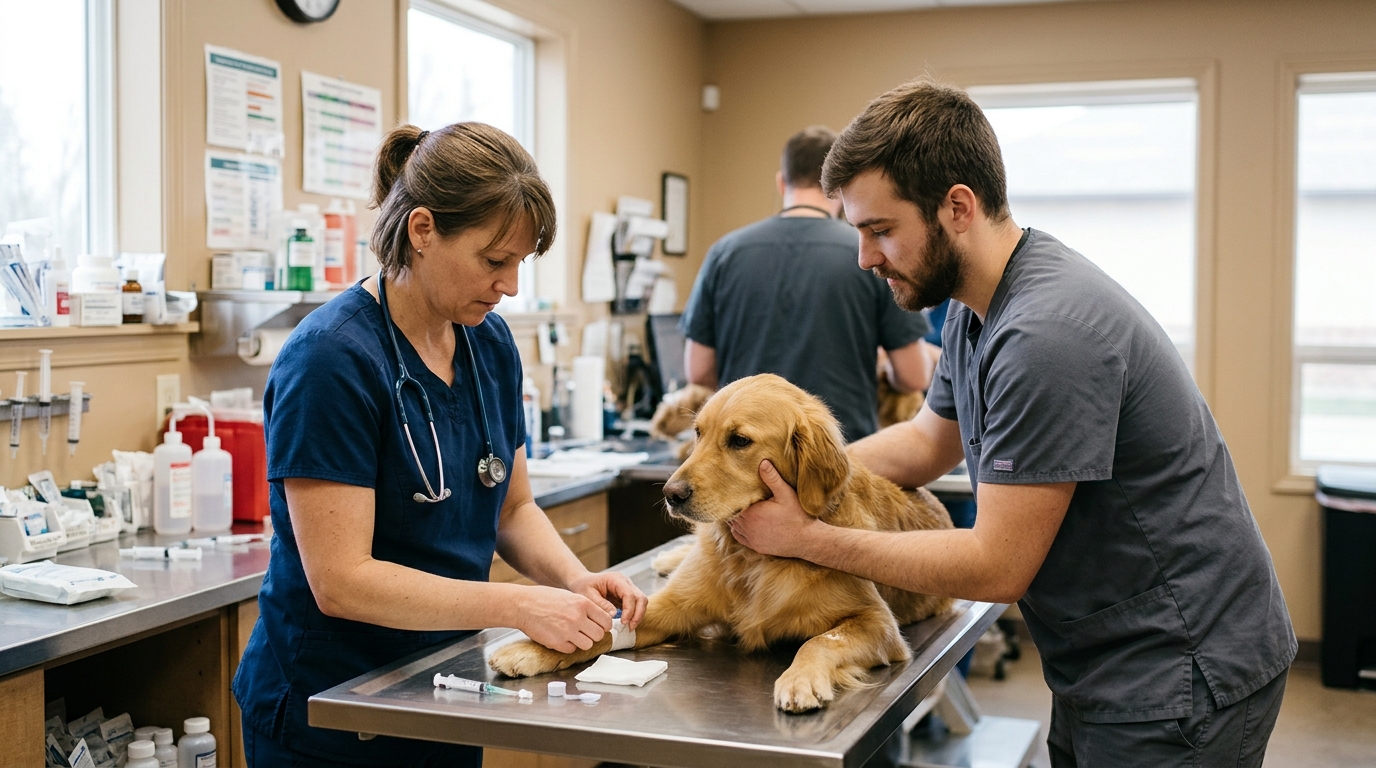
Veterinary technicians and veterinary assistants both work hands-on with animals in clinics, shelters and research facilities, but they are separate occupations with different entry routes. A technician typically completes a two- to three-year AVMA-accredited veterinary technology program and passes the Veterinary Technician National Examination (VTNE) to be credentialed as an LVT, RVT or CVT depending on the jurisdiction (NAVTA, 2020), while assistants usually enter with a high school diploma or equivalent plus short-term on-the-job training, with certification not mandatory (U.S. Bureau of Labor Statistics, 2025).

Software Engineer Interview Questions and Answers
Software engineering interviews usually run as a sequence: a recruiter screen, a technical or coding round, a design or architecture conversation, and a behavioral round with the hiring manager. Each stage tests something different — whether you can write working code, whether you weigh trade-offs sensibly, and whether you can work with the analysts, testers, and other developers who build software alongside you (U.S. Bureau of Labor Statistics, undated).

Warehouse Worker vs Forklift Operator: Which Job Fits You?
Warehouse workers (counted by the government as hand laborers and material movers) load, unload, scan and stack freight by hand for a full shift. Forklift operators (industrial truck and tractor operators) spend most of their shift seated at the controls of a powered truck, moving pallets that are too heavy to lift by hand.

So You Want to Be a Physical Therapist Assistant: Is It a Good Fit?
Physical therapist assistants (PTAs) work under the direction and supervision of physical therapists, helping patients recovering from injuries and illnesses regain movement and manage pain (U.S. Bureau of Labor Statistics, 2025). The job suits people who want patient contact all day, are comfortable kneeling, bending and lifting, and who can write accurate progress notes the supervising therapist relies on.

How to Become a Truck Driver Without a College Degree
You do not need a college degree to drive a tractor-trailer. The U.S. Bureau of Labor Statistics (2025) lists the typical entry-level education for heavy and tractor-trailer drivers as a postsecondary nondegree award, with no related work experience required and short-term on-the-job training. What you do need is a commercial driver's license (CDL), which all long-haul drivers must hold and which generally requires passing a knowledge test and a driving test, with qualifications varying by state (U.S. Bureau of Labor Statistics, 2025).

Warehouse Job Search Roadmap: From Application to Offer
Warehouse hiring usually moves faster than office hiring because most of the training happens after you start. The U.S. Bureau of Labor Statistics (2025) lists no formal educational credential and short-term on-the-job training as typical entry requirements for hand laborers and material movers, and projects about 904,200 openings a year on average over the 2025–2035 decade. That means the bottleneck is rarely your qualifications — it's whether your resume shows measurable output, whether you applied to enough of the right facilities, and whether you followed up.

UX Designer Salary: What to Expect
"UX designer" is a job title, not a federal occupation, so there is no single official salary for it. The closest match in U.S. government data is Web and Digital Interface Designers (SOC 15-1255.00), for which the U.S. Bureau of Labor Statistics publishes a median annual wage and a full percentile spread, updated in 2025; a broader Quick Facts median covers the combined group of Web Developers and Digital Designers.

Electrician vs Plumber Salary: Which Pays More?
Electricians and plumbers are paid on the same broad model: a paid apprenticeship, then journey-level wages, then a premium once you hold a master licence or supervise work. The U.S. Bureau of Labor Statistics publishes a median annual wage for electricians and a separate median for plumbers, pipefitters and steamfitters (2025), and the two sit close enough that the gap between them is usually smaller than the gap between the lowest-paid and highest-paid 10 percent within either trade (U.S. Bureau of Labor Statistics, 2025).
Is a Career in Veterinary Technology Right for You?
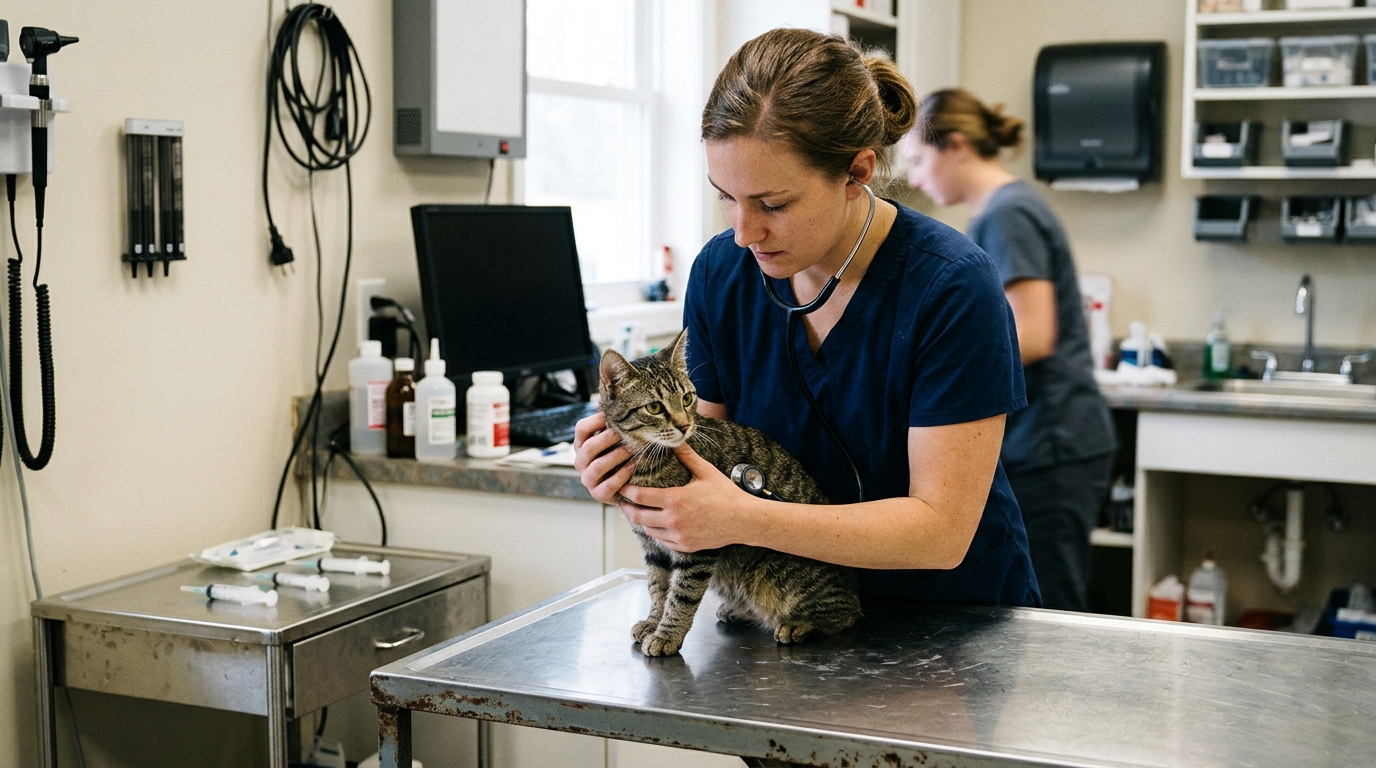
Veterinary technology suits people who want hands-on medical work with animals and can handle the physical and emotional side of it: restraining scared patients, running blood counts, monitoring anesthesia, and sometimes assisting with euthanasia. Most roles require an AVMA-accredited associate's or bachelor's degree and a passing score on the Veterinary Technician National Examination (VTNE), plus state credentialing (NAVTA; U.S. Bureau of Labor Statistics, 2025).

Breaking Into Welding: Where to Start
Welding is a hands-on trade you can usually enter with a high school diploma or equivalent plus technical training, and employers typically add on-the-job training after you are hired (U.S. Bureau of Labor Statistics, 2025). Training is available through high school programs, vocational-technical institutes, community colleges, private welding schools, and the U.S. Armed Forces, and some people start through an employer-based apprenticeship open to those with no prior experience (U.S. Bureau of Labor Statistics, 2025).

What Does a Business Analyst Actually Do Day to Day?
A business analyst sits between the people who need something changed and the people who build or approve the change. Day to day that means interviewing staff about how work actually gets done, turning what you hear into written requirements and process diagrams, pulling data to test whether the problem is real, and presenting recommendations to managers who will fund or kill the idea.

How to Get a Job in Human Resources With No Experience: Step-by-Step Guide
Human resources is one of the more accessible professional fields for a career changer, because the usual entry point is a bachelor's degree in any of several subjects with work experience in a related occupation listed as none (U.S. Bureau of Labor Statistics, 2025). Employment of human resources specialists is projected to grow 6 percent from 2025 to 2035, with about 73,700 openings projected each year on average over the decade (U.S. Bureau of Labor Statistics, 2025).

Is a Career in Accounting Right for You?
Accounting suits people who like closing a question rather than leaving it open: tying a bank balance to the penny, finding why a tax figure moved, deciding whether a financial statement can be signed off. Accountants and auditors prepare and examine financial records, examine financial statements for accuracy and compliance with laws and regulations, compute taxes owed and prepare returns, and inspect account books for efficiency and signs of fraud risk (U.S. Bureau of Labor Statistics, 2025).

How to Get Promoted to Store Manager in Retail
Getting promoted to store manager is usually an internal move, decided on evidence: whether you can hold a labor budget, cut shrink, run a clean inventory count and keep a team staffed through the holidays. Most retailers promote from their own assistant manager or manager-in-training bench, so the work is to get onto that bench and then produce numbers someone can point at.
Veterinary Technician vs Veterinary Assistant: Which One Fits You Better?
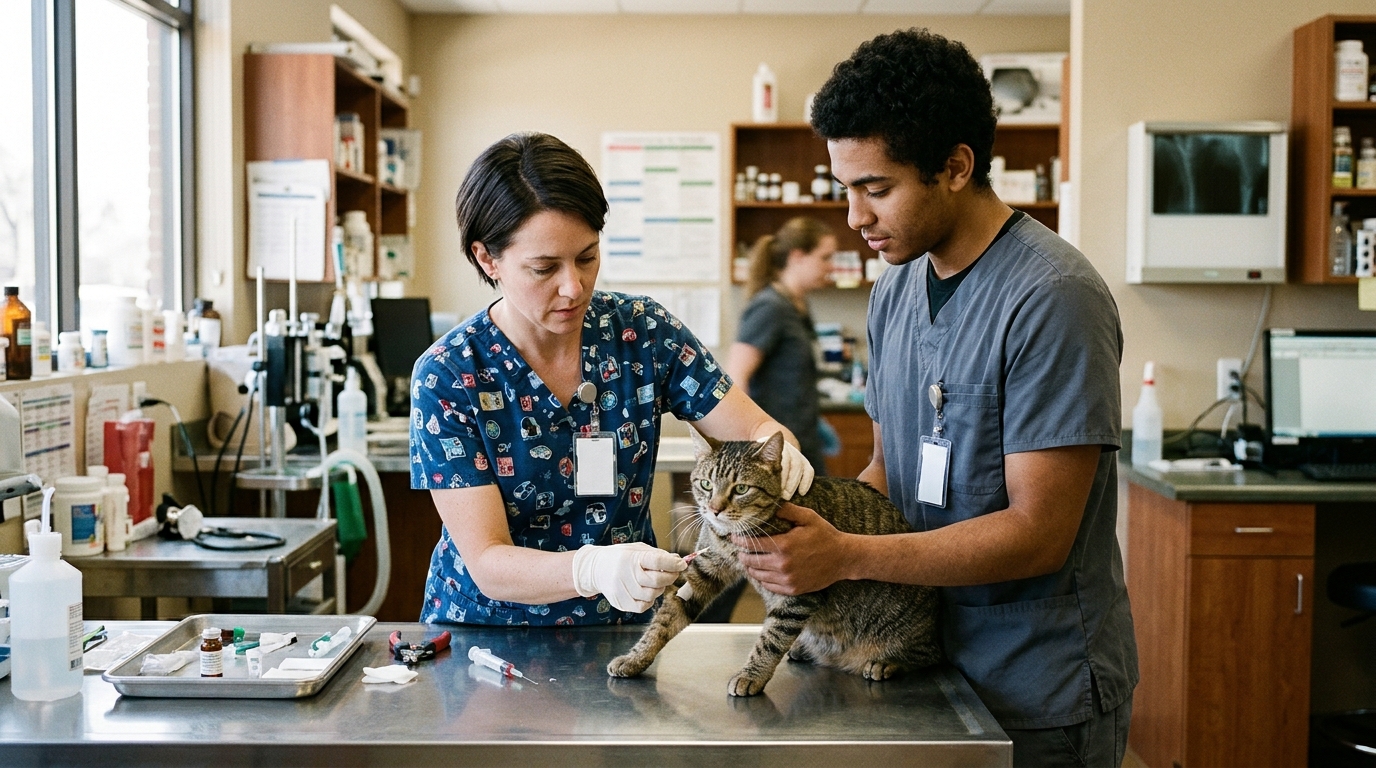
Veterinary technicians and veterinary assistants work side by side in the same treatment rooms, but they get there by very different routes. Technicians complete a postsecondary veterinary technology program — usually a two-year associate degree — and typically pass a credentialing exam to be registered, licensed or certified depending on the state, while most assistants enter with a high school diploma or equivalent and learn on the job (U.S. Bureau of Labor Statistics, 2025).

How to Get a Job as a Truck Driver: Step-by-Step Guide
Getting hired as a truck driver runs on two tracks at once: earning the credential and working the hiring process. The U.S. Bureau of Labor Statistics (2025) notes that heavy and tractor-trailer truck drivers usually have a high school diploma, attend a professional truck driving school, and must hold a commercial driver's license, with on-the-job training typically required once hired.

How Much Does a Phlebotomist Make?
The median annual wage for phlebotomists was $45,230 in May 2025 (U.S. Bureau of Labor Statistics, 2025-05). Median means the midpoint: half of phlebotomists earned more than that and half earned less. It is not the same as the average, and it is not what a first-week trainee at a plasma center earns.

Bank Teller Career Path: Education, Steps, and Timeline
Becoming a bank teller is one of the shorter entry routes in financial services: most tellers hold a high school diploma and receive about one month of on-the-job training, and banks commonly run a background check before hiring (CareerOneStop, undated). ONET places the occupation in Job Zone 1-2, "Very Little to Some Preparation Needed" (ONET OnLine, undated).

Medical Coder Salary: What to Expect
Medical coders fall under the US Bureau of Labor Statistics category "medical records specialists," which had a median annual wage of $51,140 in May 2025 (U.S. Bureau of Labor Statistics, 2025). The lowest-paid 10 percent earned under $37,000 and the highest-paid 10 percent earned more than $81,150 in the same period (U.S. Bureau of Labor Statistics, 2025).

What Does a Warehouse Worker Do? A Day in the Life
A warehouse worker moves goods through a building: receiving trailers, putting stock away, picking customer orders, packing cartons and loading outbound freight, usually guided by a handheld scanner and a warehouse management system. Most of the shift is spent standing, walking and lifting inside a distribution center, cold store, manufacturing plant or retail backroom.

Bookkeeper vs Accountant: Comparing Pay and Career Paths
Accountants are paid more than bookkeepers in essentially every US labor market, because the role carries a degree requirement, more legal responsibility, and in some cases a license. Bookkeeping pays less but starts sooner: you can be working and earning while an accounting student is still in year two of a bachelor's degree.

Warehouse Interview Questions and Answers
Warehouse interviews are short, practical and focused on three things: can you do the physical work safely, will you show up for the shift you're assigned, and can you follow a work order without being re-told. Most questions are behavioral — the interviewer wants a real example from a dock, stockroom or production line, not a description of your personality.

What Does a Social Worker Do? Duties, Skills, and Work Environment
Social workers help people prevent and cope with problems in their everyday lives, and clinical social workers also diagnose and treat mental, behavioral, and emotional problems (U.S. Bureau of Labor Statistics, 2025). Day to day that means assessing clients, connecting them to services such as food assistance or housing, writing case notes, and following up — in hospitals, schools, child welfare agencies, clinics, and community nonprofits.

How to Become a Welder Fast: Certification Paths Compared
Welding is one of the few skilled trades where a hiring decision can come down to a 45-minute test in a booth: you weld a coupon, it gets bent or x-rayed, and it passes or it doesn't. No employer in the US requires a college degree to run a MIG gun or stick rod, but nearly all of them require proof — a passed weld test to a named code, an industry credential, or documented hours.

Asking for a Raise as a Medical Coder: A Step-by-Step Guide
Asking for a raise as a medical coder works best when you tie the request to something measurable: a credential, a code set you now handle alone, an audit pass rate, or a market figure you can point to. The national median annual wage for medical records specialists, the occupation group that includes coders, was $51,140 in May 2025 (U.S. Bureau of Labor Statistics, 2025) — but that is a median for the whole occupation, not an entry-level or a senior number, and your state and employer type will move it.

How to Become a Veterinary Technician: Step-by-Step Guide
Becoming a veterinary technician usually means finishing a two-year associate's degree in veterinary technology, passing a credentialing exam, and then being registered, licensed or certified by your state board. The U.S. Bureau of Labor Statistics (2025) reports that technicians typically need a 2-year associate's degree, while veterinary technologists usually need a 4-year bachelor's degree, and that both typically must take a credentialing exam and become registered, licensed or certified depending on state requirements.
Physical Therapist vs Occupational Therapist: Which One Fits You Better?
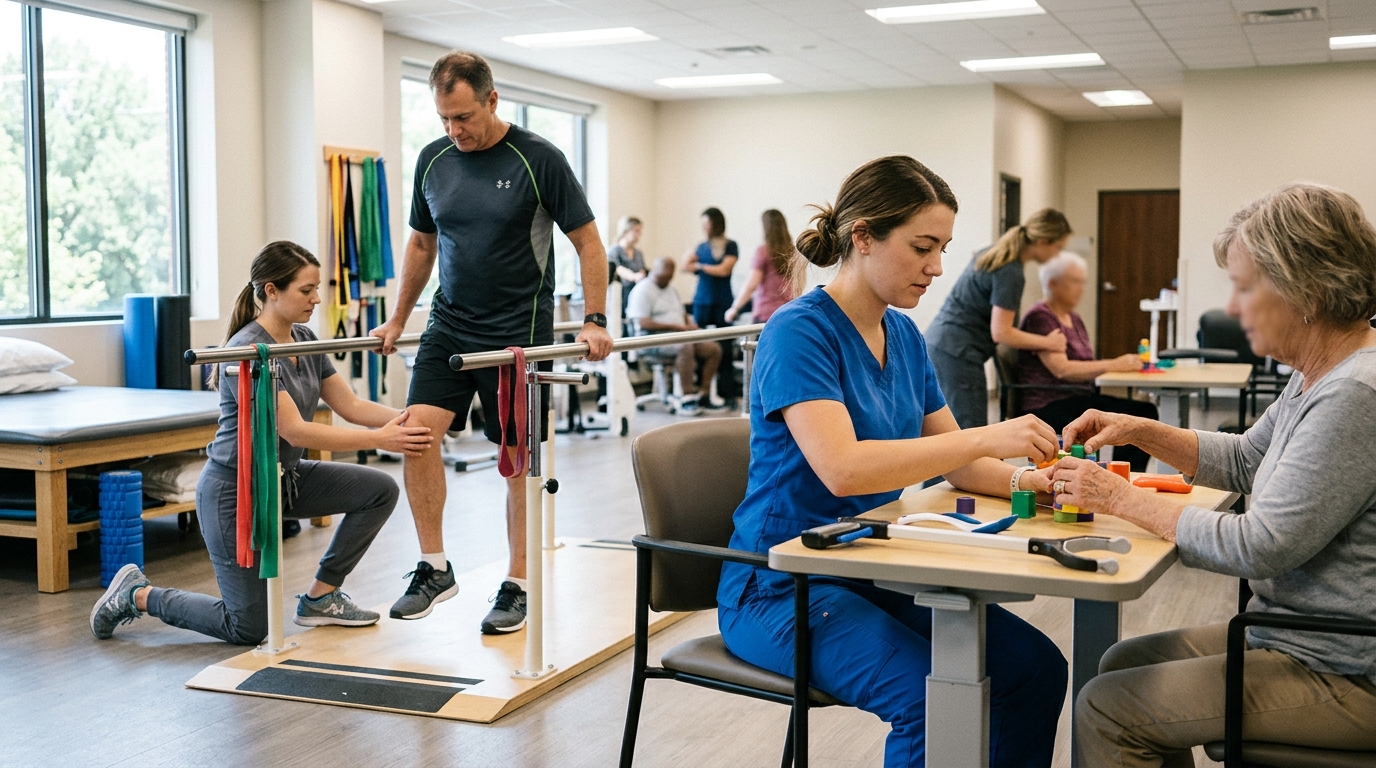
Physical therapists treat movement problems — strength, range of motion, balance, walking. Occupational therapists treat participation in daily activities — dressing, bathing, cooking, handwriting, returning to a job. The two overlap in setting, caseload and licensing, but they diverge in the entry degree (a 3-year Doctor of Physical Therapy versus a 2-to-3-year master's) and in what a treatment session looks like.

Changing Careers to Supply Chain Management: A Step-by-Step Playbook
Supply chain management is one of the more realistic mid-career switches available, because the common entry point — the logistician role — typically asks for a bachelor's degree in any field and no prior work experience in a related occupation (U.S. Bureau of Labor Statistics, 2025). The usual route is sideways first: land a planning, scheduling or logistics coordination job, learn the ERP system in place, then move up to manager once you have the operational years behind you.

Call Center Interview Questions and Answers
Call center interviews test three things: whether you can stay calm and clear with a stranger who is upset, whether you can hit volume and quality targets at the same time, and whether your availability matches a schedule that often includes evenings, weekends and holidays (U.S. Bureau of Labor Statistics, 2025). Most questions you get will be behavioral — "tell me about a time" — and many employers add a short role-play where the interviewer plays the customer.