What Does a Veterinary Technician Do?
A look at the anesthesia monitoring, radiographs, lab work and nursing care that fill a vet tech's shift, and the credential your state will ask for.
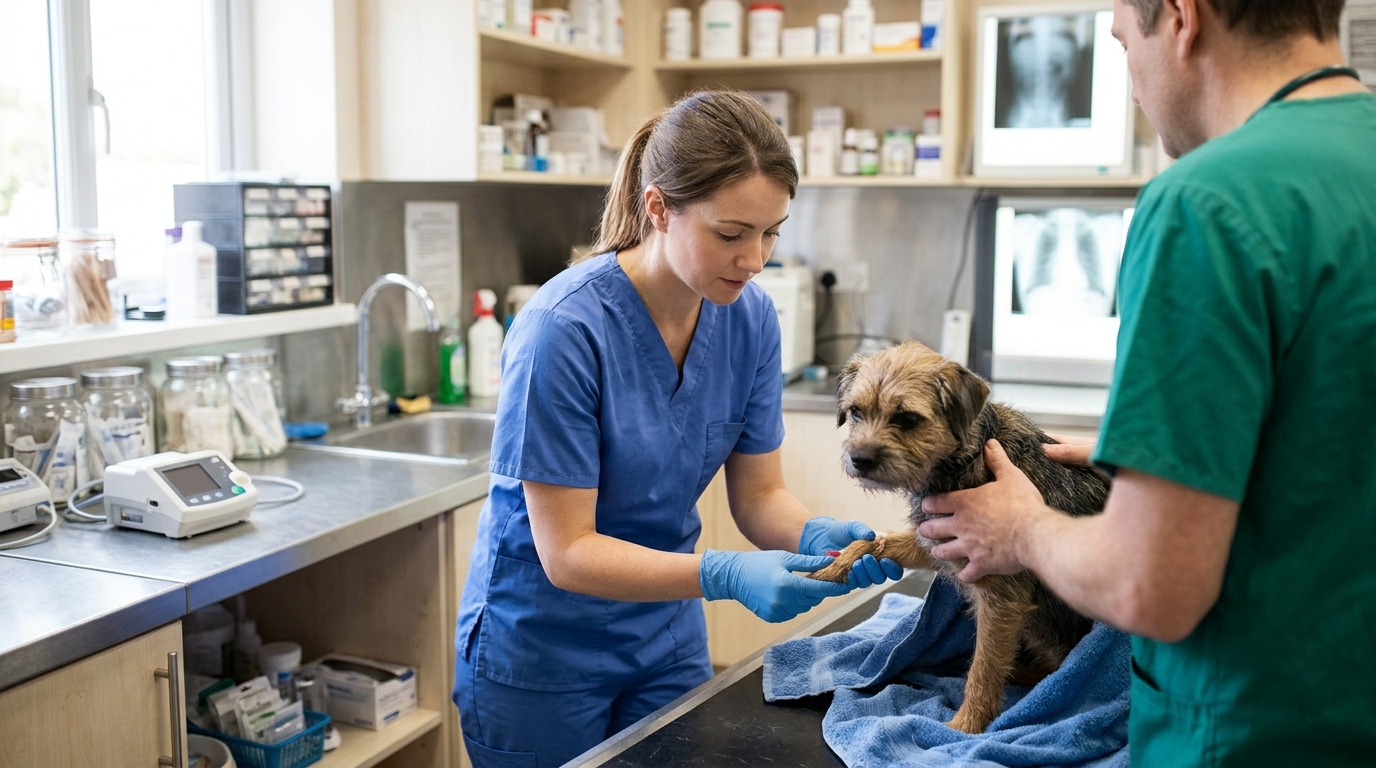
A veterinary technician is the nurse, lab tech and radiographer of an animal clinic. Working under a licensed veterinarian, you run the medical tests that help diagnose injuries and illnesses, restrain patients for exams, administer anesthesia and monitor how animals respond, give prescribed medications and vaccines, and record case histories (U.S. Bureau of Labor Statistics, 2025-08).
Most technicians work in private clinical practice, while technologists more often hold advanced research roles in laboratory settings (U.S. Bureau of Labor Statistics, 2025-08). Entry usually means a 2-year associate's degree plus a credentialing exam, though the rules differ state by state.
What a Veterinary Technician Does
Veterinary technologists and technicians, supervised by licensed veterinarians, perform the medical tests that help diagnose animals' injuries and illnesses (U.S. Bureau of Labor Statistics, 2025-08). In practice that means you draw the blood, run the urinalysis, position the patient for the x-ray, induce and monitor anesthesia, and hand the surgeon the instruments you sterilized an hour earlier.
Most of this work happens in private clinics and animal hospitals, though technicians also work in laboratories, colleges and universities, and humane societies (U.S. Bureau of Labor Statistics, 2025-08). The two titles split along training and setting: technicians generally work in private clinical practice under a licensed veterinarian, while technologists typically hold more advanced research-related jobs, often in a laboratory (U.S. Bureau of Labor Statistics, 2025-08).
You work alongside veterinarians, veterinary assistants, kennel staff and reception, and you talk directly to owners — explaining discharge instructions, collecting case histories, and describing what the vet has prescribed.
Core Duties and Responsibilities
- Observe animal behavior and condition, and record changes in appetite, mobility, wounds and vital signs (U.S. Bureau of Labor Statistics, 2025-08).
- Restrain dogs, cats, livestock and exotics during examinations and procedures, using towels, muzzles and lateral recumbency holds.
- Administer anesthesia under veterinarian direction and monitor responses, adjusting dosages as instructed (O*NET OnLine, 2024).
- Take and develop diagnostic radiographs using x-ray equipment, positioning the patient and setting exposure (O*NET OnLine, 2024).
- Run laboratory tests such as urinalyses and complete blood counts, and prepare samples for outside labs (U.S. Bureau of Labor Statistics, 2025-08).
- Prepare animals and surgical instruments for surgery, including clipping, scrubbing, draping and autoclaving packs.
- Monitor patients recovering from surgery, checking temperature, pulse, respiration and pain level (O*NET OnLine, 2024).
- Administer medications and vaccines prescribed by the veterinarian, by oral, subcutaneous and intravenous routes (U.S. Bureau of Labor Statistics, 2025-08).
- Evaluate and clean animals' teeth during dental procedures (CareerOneStop, U.S. Department of Labor).
- Maintain the controlled drug inventory and log books (O*NET OnLine, 2024).
- Provide nursing care and emergency first aid to injured or critically ill patients (U.S. Bureau of Labor Statistics, 2025-08).
A Typical Day
7:00 AM — Open and check in
Walk the hospitalized patients, record overnight notes, and check surgical admissions in. Draw pre-anesthetic bloodwork and run the panel before the veterinarian's first consult.
8:30 AM — Surgery prep
Place an IV catheter, induce anesthesia, intubate, and connect monitoring. You stay at the patient's head logging heart rate, respiration, blood pressure and oxygen saturation every five minutes and adjust the vaporizer as directed.
11:00 AM — Recovery and radiographs
Extubate and monitor the surgical patient until it lifts its head, then take and develop radiographs on a lame dog from the morning appointment list.
12:30 PM — Appointments and treatments
Restrain patients for exams, give prescribed vaccines, trim nails, express anal glands, and walk owners through discharge instructions.
Unpredictable — Emergency walk-in
A hit-by-car arrival or a bloated deep-chested dog stops the schedule. You place a catheter, start fluids, provide emergency first aid and prepare for immediate surgery while lunch goes cold.
4:00 PM — Dentals and lab work
Scale and polish teeth, chart pockets and fractures, run fecal and urine tests, and reconcile the controlled drug log.
6:00 PM — Close out
Clean and autoclave instrument packs, restock crash supplies, update case histories, and hand off hospitalized patients to the evening shift.
Work Environment
- Indoor clinical setting — treatment room, surgical suite, radiology and kennels — with most of the shift spent standing, kneeling or bending rather than seated at a desk.
- Lifting is part of the job: the work can involve lifting heavy animals onto tables and into cages (CareerOneStop, U.S. Department of Labor), often as a two-person carry for large-breed dogs.
- Barking kennels, running clippers and alarming monitors make noise constant; you will handle scared or aggressive animals that bite, scratch or kick, and the occupation has one of the highest rates of injuries and illnesses of all occupations (U.S. Bureau of Labor Statistics, 2025-08).
- Schedules often include evenings, weekends or holidays, especially in emergency and 24-hour hospitals (U.S. Bureau of Labor Statistics, 2025-08).
- The work can be emotionally demanding — you may see abused animals and may need to help euthanize sick, injured or unwanted animals (U.S. Bureau of Labor Statistics, 2025-08).
- Technologists in research roles spend more of the week in a laboratory than on a clinic floor (U.S. Bureau of Labor Statistics, 2025-08); travel is rare in small-animal practice but routine for mobile and large-animal services.
Skills and Qualifications
| Requirement | Detail |
|---|---|
| Associate's degree in veterinary technology | The usual entry credential for technicians; about 2 years full time (U.S. Bureau of Labor Statistics, 2025-08). Most credentialed technicians graduate from an AVMA-accredited associate's or bachelor's program (NAVTA). |
| Bachelor's degree in veterinary technology | Usual requirement for technologists, about 4 years, and the common route into research and laboratory roles (U.S. Bureau of Labor Statistics, 2025-08). |
| Veterinary Technician National Examination (VTNE) | National credentialing exam administered by the American Association of Veterinary State Boards (O*NET OnLine / CareerOneStop); typically sat after graduation, with results and application processing adding weeks to months. |
| State credential — CVT, LVT or RVT | Each state regulates the occupation differently, and most require you to pass a credentialing exam to become registered, licensed or certified (U.S. Bureau of Labor Statistics, 2025-08). Reported titles include Certified, Licensed and Registered Veterinary Technician (O*NET OnLine, 2024). |
| Alternate state routes | Some states provide alternate routes to credentialing outside an accredited program (NAVTA); check your state veterinary board for the specifics. |
| Veterinary Technician Specialist (VTS) | Post-credential specialty for experienced technicians who spend about 75% of their time on a specific task area and pass a specialist exam from a NAVTA-recognized Specialist Academy (NAVTA); academies generally require years of documented case work. |
| Clinical skills | Venipuncture, IV catheter placement, intubation, anesthetic monitoring, radiographic positioning, dental scaling and polishing, and controlled drug record-keeping. |
Salary and Job Outlook
| Measure | Figure and source |
|---|---|
| Entry / lowest 10 percent | Less than $35,710 a year (U.S. Bureau of Labor Statistics, May 2025) |
| Median annual wage | $47,380 a year, equal to $22.78 per hour (U.S. Bureau of Labor Statistics, May 2025) |
| Experienced / highest 10 percent | More than $63,180 a year (U.S. Bureau of Labor Statistics, May 2025) |
| Projected growth | 9 percent from 2025 to 2035, much faster than the average for all occupations (U.S. Bureau of Labor Statistics, 2025-08) |
| Annual openings | About 13,400 per year on average over the decade (U.S. Bureau of Labor Statistics, 2025-08) |
| Size of occupation | 131,400 jobs in 2025 (U.S. Bureau of Labor Statistics, 2025) |
Pay is usually structured as an hourly wage, with shift differentials for overnights, weekends and holidays in emergency hospitals, and sometimes on-call pay. Rates vary widely by state, metro area and practice type, so check the Bureau of Labor Statistics Occupational Employment and Wage Statistics pages and current job postings in your area for up-to-date local figures.
How to Get Started
- Check your state's rules first. Each state regulates the occupation differently, and most require passing a credentialing exam to become registered, licensed or certified (U.S. Bureau of Labor Statistics, 2025-08). Your state veterinary board lists the exact title and the accepted routes, including any alternate route to credentialing (NAVTA).
- Enroll in an AVMA-accredited veterinary technology program — a 2-year associate's degree for technician roles, or a 4-year bachelor's degree if you are aiming at technologist and research work (U.S. Bureau of Labor Statistics, 2025-08).
- Complete your clinical rotations and skills log, building hands-on hours in venipuncture, anesthesia induction, radiographic positioning and surgical prep. Many students work part time as veterinary assistants or kennel staff alongside classes.
- Apply for and sit the Veterinary Technician National Examination (VTNE), administered by the American Association of Veterinary State Boards (O*NET OnLine / CareerOneStop), then file your state credentialing application.
- Apply to private clinics and animal hospitals, and also to laboratories, colleges and universities, and humane societies (U.S. Bureau of Labor Statistics, 2025-08). Emergency hospitals hire year-round because of evening, weekend and holiday coverage.
- After a few years in practice, consider a specialty: a Veterinary Technician Specialist spends about 75% of their time on a specific task area and passes an exam from a NAVTA-recognized Specialist Academy (NAVTA).
Frequently asked questions
What is the difference between a veterinary technician and a veterinary technologist?
Technicians generally work in private clinical practice under a licensed veterinarian, while technologists typically hold more advanced research-related jobs, often in a laboratory setting (U.S. Bureau of Labor Statistics, 2025-08). The training differs by about two years: a technician usually needs a 2-year associate's degree and a technologist a 4-year bachelor's degree in veterinary technology (U.S. Bureau of Labor Statistics, 2025-08). Both are counted together in federal wage and employment data.
How long does it take to become a veterinary technician?
Plan on about two years for an AVMA-accredited associate's degree, plus the time to apply for, sit and get results from the Veterinary Technician National Examination and your state credential. The VTNE is administered by the American Association of Veterinary State Boards (O*NET OnLine / CareerOneStop). Some states provide alternate routes to credentialing outside an accredited program (NAVTA), so timelines vary by state.
Is the job physically dangerous?
Veterinary technologists and technicians have one of the highest rates of injuries and illnesses of all occupations, and may be bitten, scratched or kicked while handling scared or aggressive animals (U.S. Bureau of Labor Statistics, 2025-08). The work also involves lifting heavy animals (CareerOneStop, U.S. Department of Labor). Restraint technique, two-person lifts and protective handling equipment reduce the risk but do not remove it.
Will I have to deal with euthanasia?
Yes — the job may require helping to euthanize sick, injured or unwanted animals, and you may also see abused animals, which makes the work emotionally as well as physically demanding (U.S. Bureau of Labor Statistics, 2025-08). Shelter and emergency roles involve this more often than routine wellness practice. It is worth asking directly about frequency and support during an interview.
Do I need a license in every state?
Each state regulates the occupation differently, but most require technologists and technicians to pass a credentialing exam to become registered, licensed or certified (U.S. Bureau of Labor Statistics, 2025-08). That is why job titles appear as Certified, Licensed or Registered Veterinary Technician depending on where you work (O*NET OnLine, 2024). Check your state veterinary board for the title it uses and the exam and application it requires.
Is demand for vet techs growing?
Employment is projected to grow 9 percent from 2025 to 2035, much faster than the average for all occupations, with about 13,400 openings projected each year on average over the decade (U.S. Bureau of Labor Statistics, 2025-08). The occupation held 131,400 jobs in 2025 (U.S. Bureau of Labor Statistics, 2025). Many of those openings come from workers leaving the field, so turnover is part of the picture.
Sources
- U.S. Bureau of Labor Statistics — Veterinary Technologists and Technicians : Occupational Outlook Handbook (2025-08)
- O*NET OnLine — 29-2056.00 - Veterinary Technologists and Technicians (2024)