How to Get Started
How to Get Started guides on Jobstepup.

How to Become a Cybersecurity Analyst After a Military Career
If you held an IT, signals, intelligence or cyber work role in uniform, the move to civilian cybersecurity analyst work is usually a 6-to-18-month project rather than a restart. You already have the habits the job runs on — shift handovers, incident reporting, configuration compliance — and possibly an approved baseline certification. The U.S. Bureau of Labor Statistics (2025) lists a bachelor's degree as the typical entry-level education for information security analysts, with fewer than 5 years of related work experience and no on-the-job training required.

How to Become a Pharmacy Technician: Step-by-Step Guide
Becoming a pharmacy technician usually means finishing high school, completing training (either through an employer or a formal program), meeting your state board of pharmacy's registration rules, and sitting a certification exam such as the Pharmacy Technician Certification Exam (PTCE) from the Pharmacy Technician Certification Board (PTCB) or the ExCPT from the National Healthcareer Association (NHA). The U.S. Bureau of Labor Statistics (2025) lists a high school diploma or equivalent as the typical entry-level education, with on-the-job training as part of the usual route.

How to Switch to a Career in Nursing From Teaching
Moving from teaching to registered nursing means earning a nursing degree and a state license, not transferring your teaching credential. If you already hold a bachelor's degree in any field, the usual route is an accelerated BSN, which runs 12 to 19 months and sometimes up to two years (Nurse.org, 2026-01-19), after prerequisite science courses and before the NCLEX-RN licensing exam.

How to Become a Solar Panel Installer Without a Degree
Solar photovoltaic installation is one of the few construction trades where a high school diploma or GED, an OSHA 10-Hour Construction card and a clean driving record are enough to be considered for a ground-crew or installer-helper job. Employers substitute documented safety training, verifiable hands-on hours and entry credentials such as the NABCEP PV Associate for formal education, and they train the rest on site.

How to Become a Truck Driver Without a College Degree
You do not need a college degree to drive a tractor-trailer. The U.S. Bureau of Labor Statistics (2025) lists the typical entry-level education for heavy and tractor-trailer drivers as a postsecondary nondegree award, with no related work experience required and short-term on-the-job training. What you do need is a commercial driver's license (CDL), which all long-haul drivers must hold and which generally requires passing a knowledge test and a driving test, with qualifications varying by state (U.S. Bureau of Labor Statistics, 2025).
How to Become a Welder Fast: Certification Paths Compared
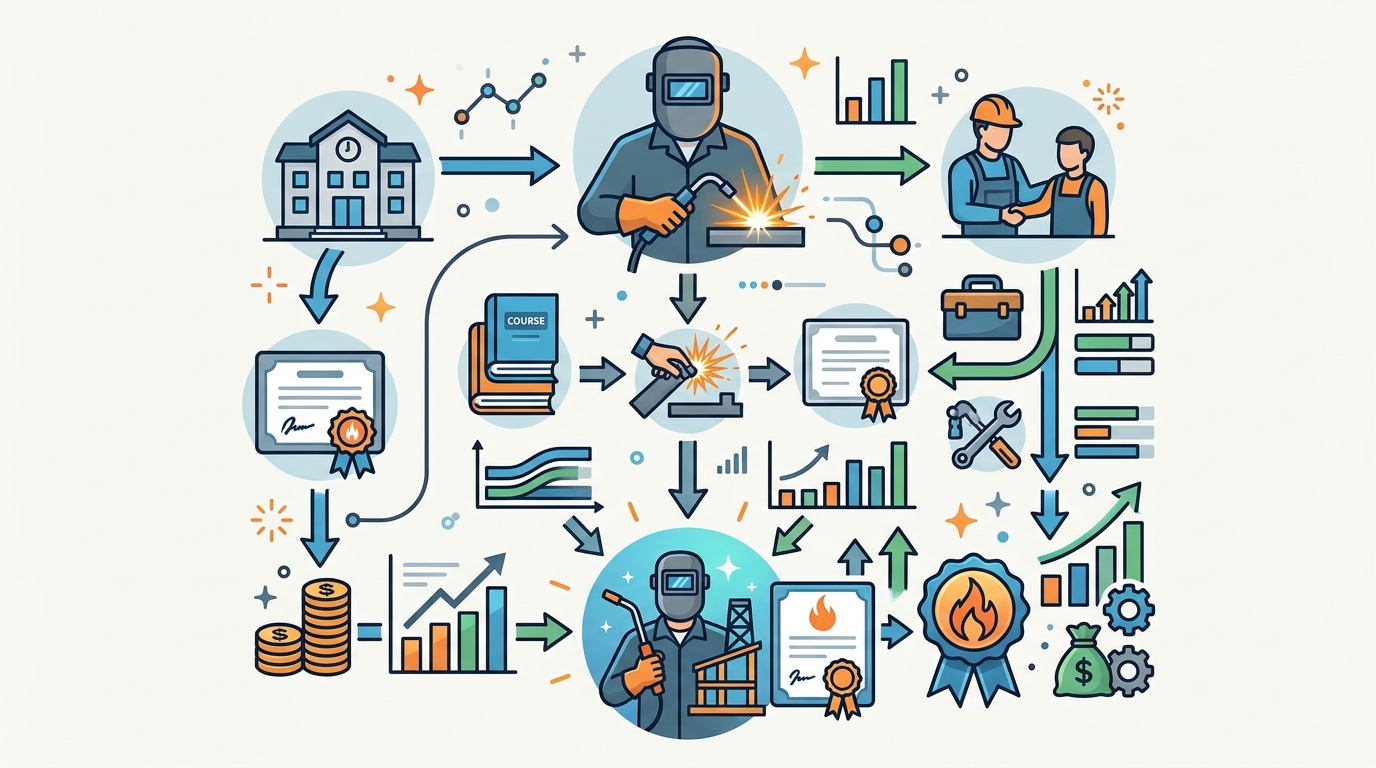
Welding is one of the few skilled trades where a hiring decision can come down to a 45-minute test in a booth: you weld a coupon, it gets bent or x-rayed, and it passes or it doesn't. No employer in the US requires a college degree to run a MIG gun or stick rod, but nearly all of them require proof — a passed weld test to a named code, an industry credential, or documented hours.
How to Become a Veterinary Technician: Step-by-Step Guide
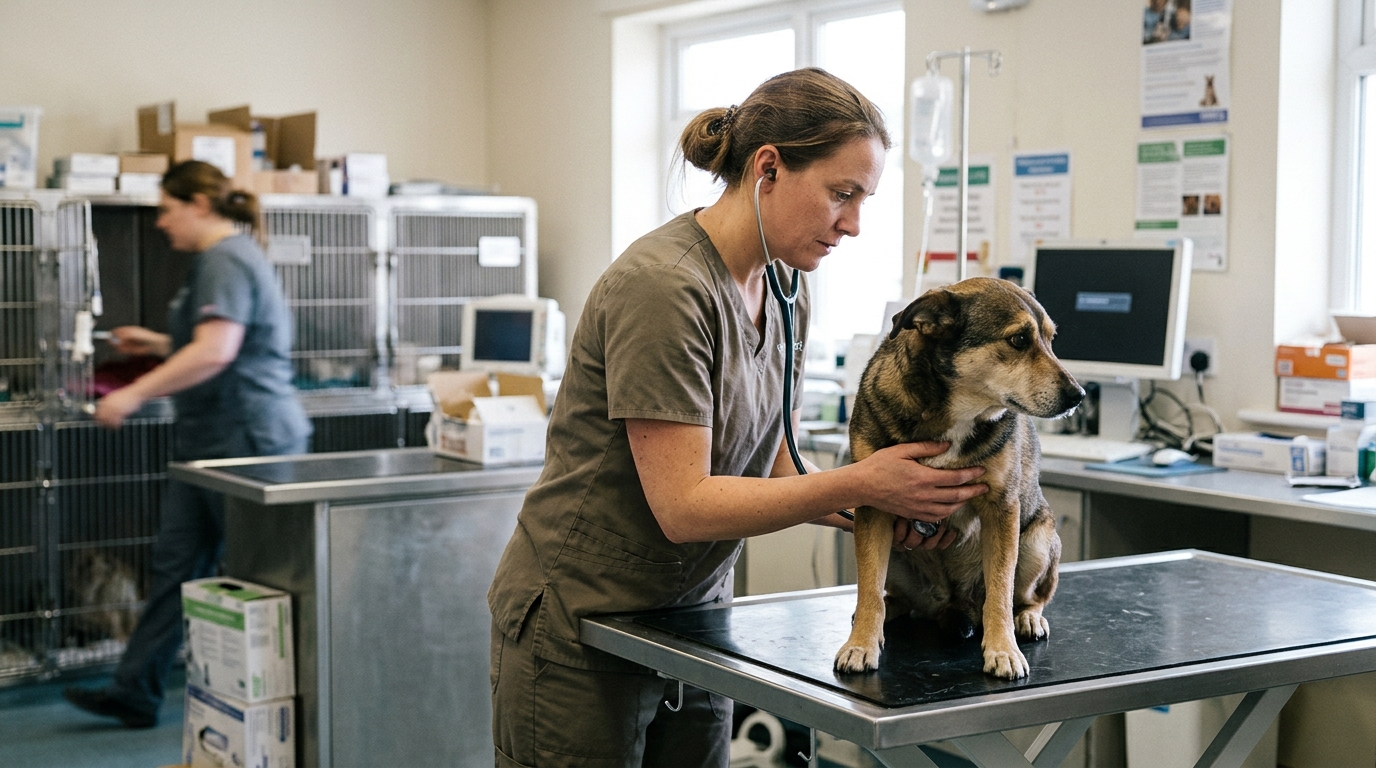
Becoming a veterinary technician usually means finishing a two-year associate's degree in veterinary technology, passing a credentialing exam, and then being registered, licensed or certified by your state board. The U.S. Bureau of Labor Statistics (2025) reports that technicians typically need a 2-year associate's degree, while veterinary technologists usually need a 4-year bachelor's degree, and that both typically must take a credentialing exam and become registered, licensed or certified depending on state requirements.